XPeng's IRON Robot Gets a Robot-Specific Solid-State Battery
XPeng Group vice-president Gu Jie told SAECCE 2026 that the IRON robot's solid-state battery has entered small-batch production, with the robot pre-SOP. XPeng calls it the first battery designed specifically for a humanoid: high energy density, rebuilt safety standards and a thermal-runaway barrier. No energy density, cell chemistry or supplier has been published, and cars are not mentioned. Mass production stays targeted for the end of 2026.
XPeng's humanoid robot IRON now has a solid-state battery of its own, and XPeng says it has started coming off a production line. The news did not arrive as a press release. On the morning of 28 October, XPeng Group vice-president 顾捷 (Gu Jie) told the embodied-intelligence forum at SAECCE 2026 in Suzhou that IRON's solid-state battery had entered small-batch production (小批量量产下线), and that the robot as a whole is at the stage before SOP — start of production.
His talk was titled "From building cars to building 'people': XPeng's engineering practice for high-end general-purpose humanoid robots", and the battery was one part of it. The rest was about the harder problem: a machine that has to move, sense and stay safe in a room full of people.
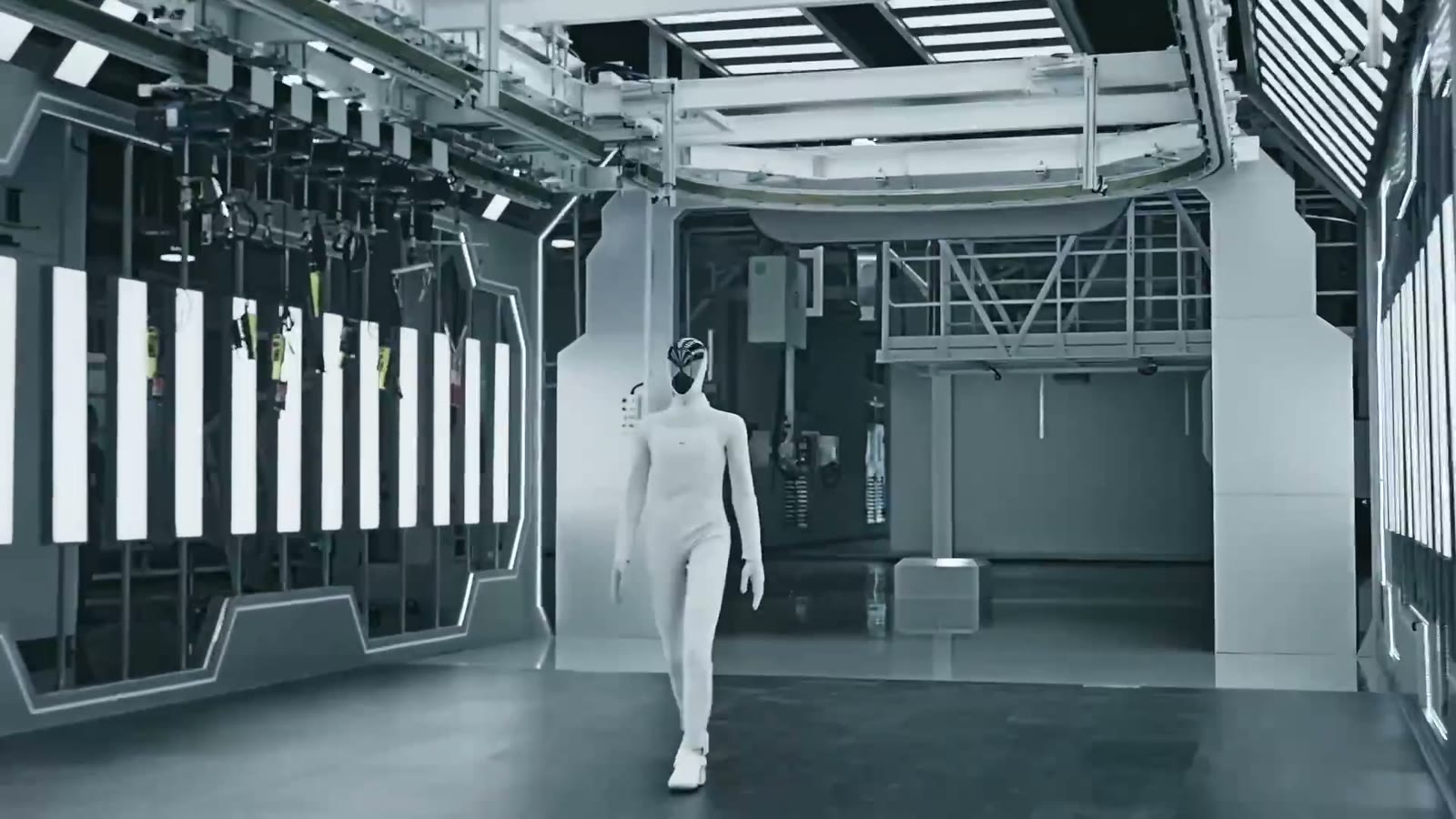
IRON walking the automated production hall at XPeng Robotics, opened on 8 September 2026. The robot is pre-SOP; XPeng says its solid-state pack is now being built in small batches. Image: XPeng.
The write-up we are working from is by 烟隐烟隐, the supply-chain watcher who has been this blog's best source on XPeng's factories. His post went up at 16:42 Beijing with a clip of the September line-opening ceremony attached. By 17:39 — 57 minutes later — it had 40 likes, 6 comments and no reposts: modest numbers for a piece of news the trade press had been running since lunchtime. CNMO published at 12:19, IT之家 at 12:54 and 财联社 at 13:06, all from the same speech. The industrial milestone was a conference quote, not a company campaign.
What Gu Jie actually said
Four claims, and all of them are narrower than "XPeng has a solid-state car battery":
- The pack is robot-specific. XPeng has "launched the industry's first solid-state battery designed for a robot" (首发机器人专用固态电池). It is not a car cell with a different enclosure.
- The body drove the design. Constrained by the robot's internal volume, the pack uses a high-energy-density design. No Wh/kg figure was given.
- The safety standard was rebuilt. The design adds a thermal-runaway propagation barrier (防热失控扩散设计), and XPeng says it survives impact and nail-penetration tests.
- Production is real but small. The pack is being built "in small batch off the line"; the robot is pre-SOP. No unit count, no battery line and no date were offered.
CNMO's report adds the only numbers attached to the pack anywhere: 30% lighter and 30% more capacity than a conventional liquid-electrolyte lithium battery, and no fire in nail-penetration tests. Those figures do not appear in the quotes carried by 第一财经 or 新浪汽车, so treat them as CNMO's reporting rather than XPeng's.
Why the battery is a robotics problem
Most humanoid robots still run on conventional lithium-ion cells, and the constraint is geometry. In a car the pack is the floor — there is volume to spend. In a humanoid, the battery shares a torso with joints, actuators, wiring and skin, and the body has to remain recognisably human. The trade-off is blunt: a bigger pack, or less runtime and more trips to a charger. For a machine doing eight-hour shifts in a shop, that is an operating cost, not a spec-sheet annoyance.
Safety is a harder constraint than in a car. A humanoid works at arm's length from customers, gets knocked into, and falls over. A pack that can be punctured without catching fire is a precondition for putting the machine in a mall.
That is why the source post frames the battery as a main battlefield rather than a component. Humanoid competition is usually described as motors, reducers and the large-model stack; the cell decides how long the machine can work, how heavy it is, and whether it can be sold to a business at all.
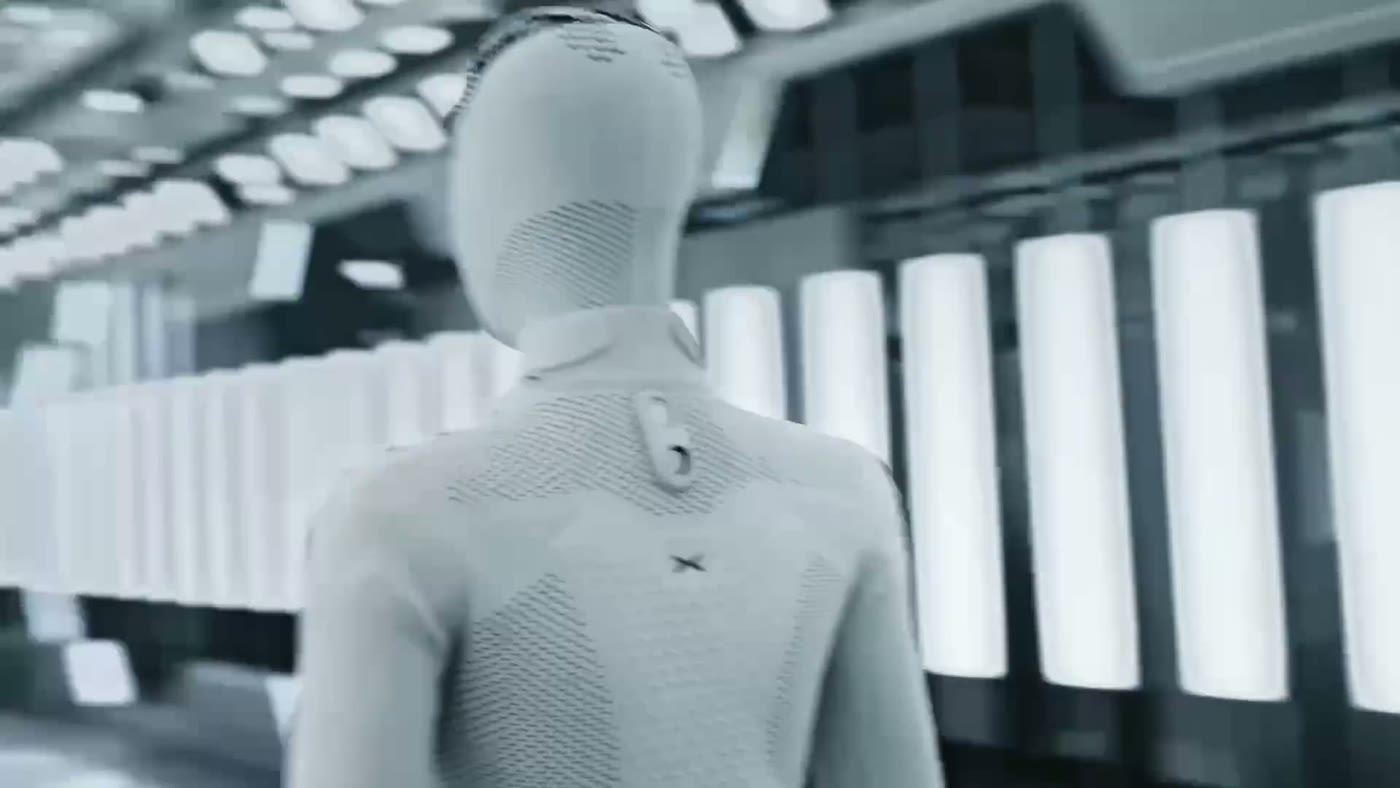
The torso the pack has to fit inside. XPeng says the battery was custom-developed around this internal volume. Image: XPeng.
Robots first, cars second
The obvious question is whether this is XPeng's car solid-state battery arriving early. There is no evidence that it is, and the company has been careful about the wording. At its 2025 Tech Day, XPeng said IRON would be the first humanoid in the industry to use an all-solid-state (全固态) battery. At SAECCE the phrase was solid-state (固态). XPeng has not published the cell chemistry, the supplier, the pack voltage or a pack-level energy density, so whether this is a true all-solid cell or a semi-solid one is not settled by anything the company has said.
What the sequence does show is a deliberate order. XPeng's car business has spent years moving battery work in-house — packs, thermal management, 5C charging — and the car market punishes every yuan of cell cost. A robot is a far smaller battery market with a far higher tolerance for cost per kilowatt-hour, and its pack is measured in hundreds of watt-hours rather than tens of kilowatt-hours. If you want to learn to make solid-state cells at production volume, that is a cheaper place to learn than a car line that has to hit a cost target on every vehicle.
The source post makes the transfer explicit, ending with XPeng potentially carrying the mature robot pack over to "____, ____, ____". The blanks are the author's, but the direction is not: robot first, car later.
For scale: CATL said this week that all-solid-state batteries are expected to reach small-batch production in 2027. XPeng's robot pack is roughly a year ahead of that curve — on a battery a small fraction of the size.
The rest of the schedule has not moved
- 2025 Tech Day — IRON revealed; XPeng says it will be the industry's first humanoid with an all-solid-state battery, with mass production targeted for the end of 2026.
- 24 August 2026 — XPeng's robotics business closes its first external round of more than US$900 million, at a post-money valuation above US$6.3 billion — a record for a Chinese embodied-intelligence company.
- 8 September 2026 — the robot production line opens; the first high-end general-purpose humanoid completes automated final assembly and walks off the line unaided.
- 28 October 2026 — the solid-state pack is in small-batch production; the robot is pre-SOP.
- End of 2026 — mass production target. First half of 2027 — deliveries begin, starting in XPeng stores and shopping malls as guides and product explainers, before industrial and home use.
The robot itself is already the machine XPeng has been showing running the car's VLA 2.0 stack — the same model family that drives its cars. The line-opening film is worth watching for what it shows: not a lab demo, but a lit assembly hall, a hangar-style body shop, and a robot walking itself out of it.
What is not confirmed
- Energy density at cell or pack level. No Wh/kg figure has been published.
- Cell chemistry and supplier. XPeng has not said whether the cells are in-house or from a partner, nor whether the electrolyte is sulphide, oxide or polymer.
- What "small batch" means. No unit count, no battery line, no yield.
- The SOP date. "Pre-SOP" has no date attached.
- Whether the store robots of 2027 use this pack. The plan and the pack are consistent; XPeng has not joined them up.
- The 30%/30% figures, which come from one outlet rather than from the speech.
The bottom line
A solid-state battery in small-batch production is still a long way from a cheap, certified, mass-produced one — and this announcement says nothing about XPeng's cars. But it is a different kind of claim from a Tech Day slide: XPeng is now building the cell, on a line, for a robot it intends to sell in stores next year. The car industry has spent a decade promising solid-state; the first production line XPeng has pointed at it is for a humanoid. The number to watch is not the energy density. It is the unit count when IRON's mass production starts at the end of the year.
Source: 烟隐烟隐 on Weibo (28 October 2026), with reporting from 第一财经, 新浪汽车, IT之家, 财联社 and CNMO — translated & adapted for XPENGTech.
Enjoyed this? Get the next one direct.
New articles, or a daily / weekly digest — delivered to your inbox.