XPENG's 2027 plan: overseas sales to double, NGP to Europe, robots need touch
On XPENG's 2026 investor call, He Xiaopeng and Brian Gu set out 2027 plans: overseas volume at least doubling, NGP coming to Europe, a broader model line-up and a hardware-first view of robotics.
XPENG used its 2026 investor call to sketch out 2027: overseas volume growing at least twofold, a wider model line-up on top of GX, L03 and L05, NGP driver assistance arriving in Europe, and a robotics strategy that puts hardware and touch data ahead of a single large model. Chairman and CEO He Xiaopeng and vice chairman Brian Gu took the questions; the transcript below is translated from the Weibo post by 杨骏驱.
The 2027 plan, in the company's words
He Xiaopeng was blunt about the home market. Domestic car business in 2027 still faces "considerable challenges", though he expects it to be better than this year. Overseas is where the growth is: he said he is confident that battery-electric-led cars have "huge growth prospects" abroad in 2027 and 2028, and that overseas growth next year should be "at least double" and certainly higher than domestic. He called 2027 the "first year" of XPENG's high-speed overseas ramp, on both product and autonomous driving capability.
On the domestic side, the emphasis is on selling current models at current prices well. He said the company now watches sales and delivery performance closely in the three to six months after a model starts delivery, and cited GX, L03 and L05 as showing good data on that measure. New models and facelifts are planned for next year to widen the line-up.
Distribution is changing too. XPENG has been concentrated in tier-one and tier-two cities; it now intends to extend into lower-tier cities and into the northwest and western regions of China, with separate network optimisation for XPENG and MONA given their different customer bases.
Overseas: regional split, NGP in Europe, local manufacturing
Brian Gu gave the regional shape of the overseas target. Europe should remain about 50% of overseas volume, Southeast Asia and Asia-Pacific about 30%, and the Middle East and Latin America about 20%.
- Growth is expected mainly from recently launched global models: G9L, L05 and GX. L03 contributed less than a full quarter of deliveries this year, so most of next year's increment should come from those newer products.
- The line-up covers mainstream family SUVs (L03, L05, G6), premium family SUVs (G9, G9L, GX), premium-use models in some Middle East markets, and X9, which Gu described as still one of the most popular MPVs and is also sold in Europe.
- Gu said he had just returned from Australia and the UK, markets where XPENG is increasing commitment and investment. The target for overseas sales and service locations is more than 1,000.
- XPENG will introduce NGP and other advanced driver assistance features in Europe and other markets next year, which Gu framed as supporting premium positioning and pricing.
- On trade barriers, Gu said the company has been managing them for several years and will stay flexible on positioning, pricing and channel models, while setting up local manufacturing and investment in Europe and Southeast Asia in advance.
On the export tax rebate, which the questioner said falls from 13% to 9% next year, finance lead James Wu noted that exports were already more than 20% of volume in the third quarter. The supplied excerpt of his answer is cut off, so we are not reporting his mitigation measures.
Robotics: hardware first, touch data second
Asked where XPENG's robot moat lies as large-model companies move into physical AI, He Xiaopeng argued from the history of autonomous driving. Simulation and demos looked convincing in 2015-2020, he said, but did not ship because of accuracy, safety, cost and latency problems, including the latency that sank end-cloud architectures. His conclusion: a single general-purpose model trying to cover both system layers is hard to land.
XPENG's approach is "two directions, four capabilities":
- The hardware itself, which he said most people badly underestimate: the foundation of physical AI is the physical, not the AI.
- Scale in manufacturing and sales, because only scale produces commercial capability and, in turn, data.
- High-quality, diverse data, with touch, pressure, temperature and body-sense data mattering more for robots than the visual data large-model companies are buying. He compared touch data to vision data in autonomous driving.
- End-side and cloud compute, for on-device inference, cloud inference, training and simulation. He said Chinese self-developing carmakers have good reserves and barriers in end-side compute.
What this means for owners
Most of this is forward-looking company commentary, not shipped software. The concrete items for Australian owners are indirect: Gu's comments on Australia as a market receiving more investment, and the plan to bring NGP to Europe next year. XPENG has not stated an Australian NGP timeline in these sources, and European rollouts have historically preceded other right-hand-drive markets, so treat any local timing as unconfirmed until XPENG announces it. The domestic push into lower-tier cities and the model facelifts are China-market plans.
Sources
- 小鹏集团2026年电话会机构问答原汁原味全文 — Weibo, 杨骏驱, 16 November 2026
Photos from the source posts
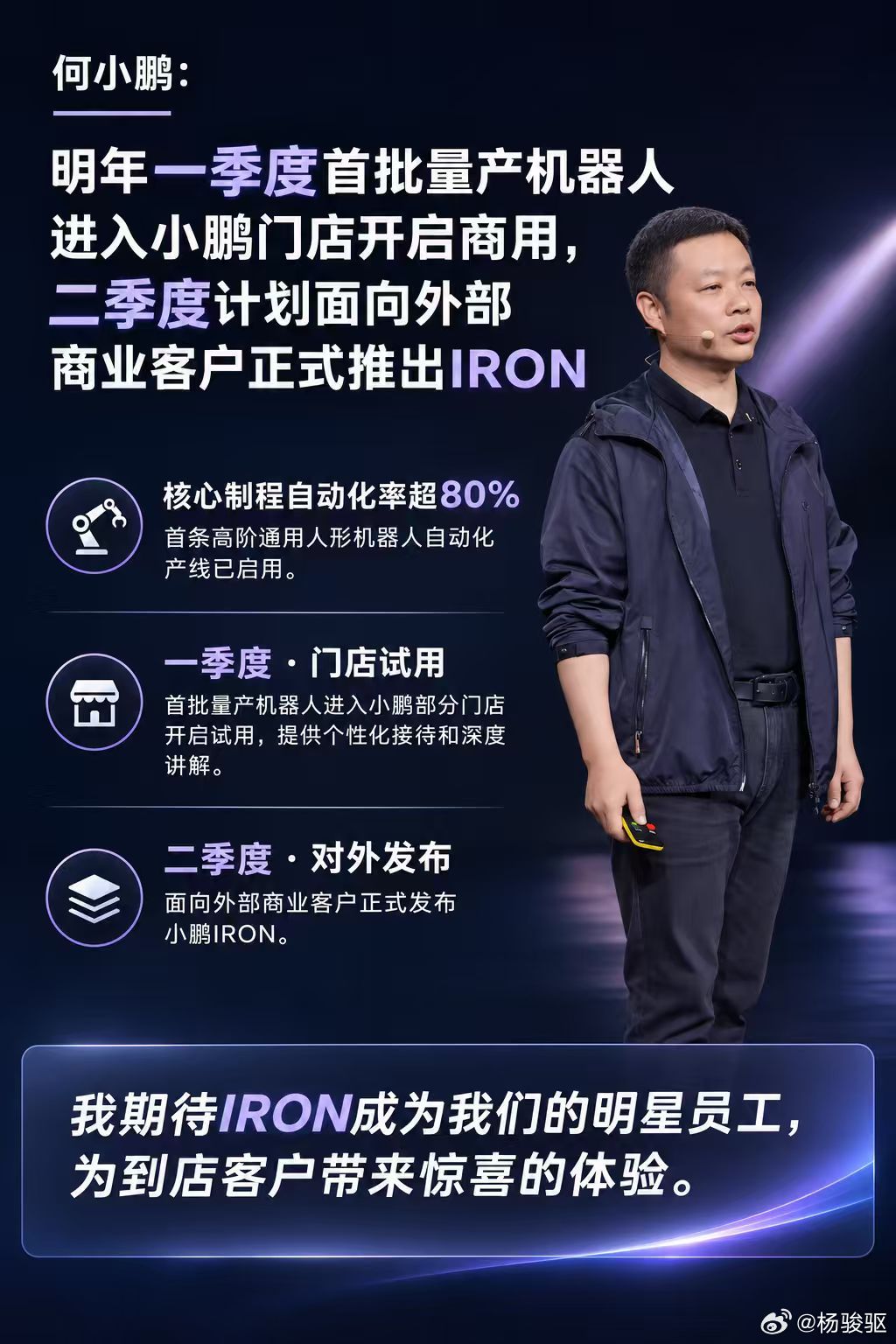 Photo: 杨骏驱 on Weibo — original post
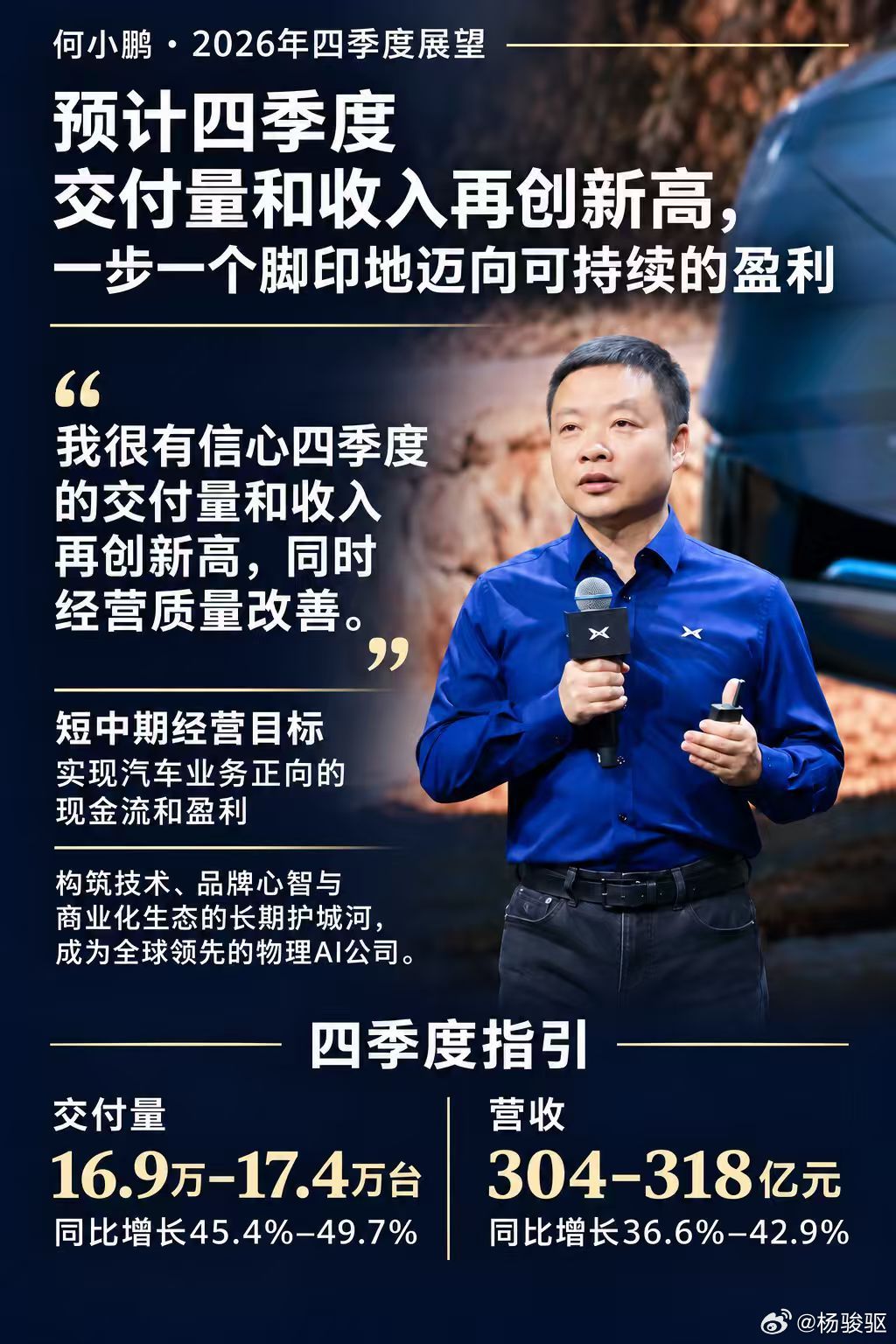 Photo: 杨骏驱 on Weibo — original post
Enjoyed this? Get the next one direct.
New articles, or a daily / weekly digest — delivered to your inbox.