XPENG Q3 call: second-gen VLA nears full rollout, Turing chip still underused
An owner's read of XPENG's Q3 earnings call: second-gen VLA and dual-Orin testing progressing, overseas and high-end trims driving margin, but cockpit compute and ADAS competition remain open questions.
XPENG's Q3 earnings call, held the day before an owner post summarising it, put software and overseas margin at the centre of the company's story. The most concrete item for drivers is the second-generation VLA (Vision-Language-Action) assisted-driving stack: a test build for dual-Orin cars is now being deployed, with a full rollout targeted before the end of the year. That timing comes from an owner's account of the call, not from a published XPENG schedule.
Second-generation VLA and the dual-Orin build
The poster, Weibo user 大包子狸, writes that second-generation VLA is drawing positive feedback from both users and management, and that in their own experience it has delivered a real improvement at the user end. They frame it as what keeps XPENG in a leading position in assisted driving.
The detail worth flagging for owners is the hardware split. The test version now landing is for cars on dual Orin chips, and the poster expects it to reach full release before year-end. XPENG has not, in this source, stated which models or markets are included, so treat the year-end target as an expectation rather than a commitment.
Margins, MONA and the Turing chip question
The poster identifies overseas business and high-end models as the two main sources of profit growth in Q3. They also push back on the argument that XPENG's cars are getting cheaper and diluting the brand: with the L03 and L05 on sale, they say, MONA's average transaction price is rising rather than falling.
On the physical AI side, the poster says XPENG is building out its technology-supply business beyond Volkswagen, aiming for a wider range of partners. Robots are described as progressing toward mass production, with a push toward greater generality so they suit more use cases.
The critical note concerns the cockpit. The poster calls the cabin domain's performance "relatively sluggish" and says it is unclear how XPENG will put the compute of the third 图灵 (Turing) chip to use — adding that the industry as a whole does not yet have a good answer for on-device compute at that scale.
Risks the poster flags
- Overseas profit growth is exposed to more Chinese brands entering the same markets; XPENG has some differentiation, but whether it is enough is unproven.
- Second-generation VLA's real-world delivery is uncertain, with competing next-generation assisted-driving systems from ADS5, MMT, 元戎, Horizon, 马赫 and NWM arriving quickly.
- Cockpit experience lags, and the third Turing chip's headroom remains unused.
What this means for owners
Nothing here is an Australian rollout date. The dual-Orin test build and the year-end target are described at the level of XPENG's overall fleet, and the source does not say which markets receive the software first. Owners in Australia should expect any VLA release to follow the company's usual pattern of staged regional deployment rather than a same-day global push, though the post gives no timing to work from.
The Turing chip point matters more than it might appear. If the third chip's capacity is still without a clear use case, owners of cars carrying it should not expect a near-term cabin feature that depends on that headroom. The poster is explicit that this is an industry-wide problem, not an XPENG-only one.
Editor Note: My understanding is that the third chip will be used by the "Master Agent" running locally for conversational AI where cars with only 2 have to rely on cloud services for full "Master Agent" expeience. Steve
Sources
- 大包子狸 on Weibo — Weibo, 大包子狸, 17 November 2026.
Photos from the source posts
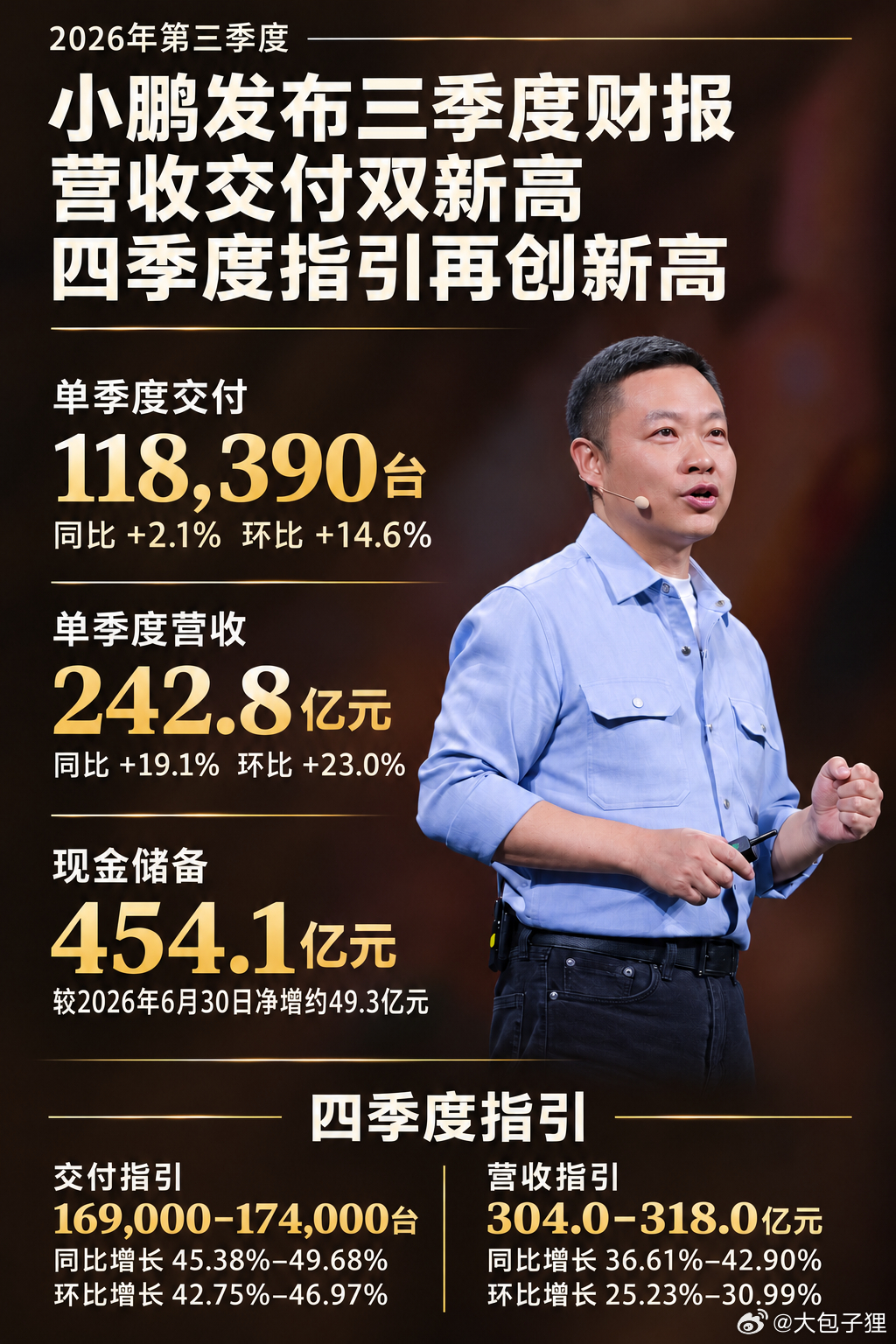 Photo: 大包子狸 on Weibo — original post
Enjoyed this? Get the next one direct.
New articles, or a daily / weekly digest — delivered to your inbox.