XPENG patents UDS diagnostics for robot joints, reusing EtherCAT
A XPENG patent filing adapts automotive UDS diagnostics to robot joints, carrying on-demand service requests over the robot's existing EtherCAT network instead of adding a separate CAN diagnostic bus.
XPENG has filed a patent for a diagnostic system aimed at its robots, and the interesting part is not the robot itself but the plumbing. The filing proposes taking UDS (Unified Diagnostic Service), the request-and-response protocol already used to diagnose car controllers, and applying it to individual robot joints. It also proposes carrying those diagnostic requests over the robot's existing EtherCAT network rather than adding a dedicated diagnostic bus.
Why robot joints need a common diagnostic language
The post's framing is practical: when a joint fails in the field, you cannot call back the engineer who designed that specific joint every time. Someone has to read the software version, pull fault records, run calibration and update firmware. During development each team can use its own tools, but once robots ship in volume and are spread across sites, maintenance needs one entry point.
Under the patent's approach, the diagnostic tool and each joint controller follow the same service rules. The tool sends a request, the joint's processing unit handles it and returns a result in the agreed format. The maintenance technician sees one consistent set of services; how a given joint executes the operation internally stays that joint's business.
How the requests travel: EtherCAT, not a new bus
Robots already send motion commands to joints and receive position and status back, and the filing uses EtherCAT for that cyclic traffic. Diagnostics do not need to run every control cycle, so the patent uses EtherCAT's non-cyclic communication and its mailbox mechanism to carry on-demand tasks. That avoids laying a separate CAN diagnostic line just for maintenance.
Different diagnostic jobs have different shapes, so the filing selects a transport per task type:
- CoE for lightweight requests such as parameter reads and writes, with diagnostic service identifiers and parameters mapped to specific indices in the object dictionary and moved via service data object upload/download.
- FoE for file transfer, where a whole program or log file is being moved.
- EoE to carry Ethernet frames inside the EtherCAT mailbox.
The point is that reading one value and shipping a firmware file should not be forced through the same procedure.
At execution, the system decides which diagnostic to run, picks the channel, wraps the request in that channel's protocol and attaches the target joint's address. The joint unwraps the outer protocol, extracts the UDS service request, performs the operation and returns a response along the same channel. UDS defines the service, the network protocol moves it, and the joint address identifies the destination.
There is also a gateway layer. A torso gateway can sit between an upper level using DoIP (diagnostics over IP) and the joint-level EtherCAT sub-protocols, unwrapping and converting requests in both directions. External tools then do not have to deal with each internal network segment directly, and the conversion work is concentrated in the gateway.
Scheduling and bandwidth
The filing addresses what happens when tasks collide. If one joint is busy with a task and another arrives that needs a different channel, the second waits for the first to finish before switching channels. Tasks aimed at different joints can run in parallel. The post is explicit that supporting multiple protocols on the network does not mean a joint can be interrupted mid-operation, and that file and program handling in particular needs a defined order between tasks.
Non-cyclic communication also still shares real network capacity, so large file transfers consume bandwidth and maintenance traffic has to be coordinated with what the robot is doing.
What this means for owners
This is a patent filing, not a product announcement, and nothing here indicates a timeline, a robot model or availability in any market, Australia included. The relevance to owners is indirect: XPENG's robotics work is being built on automotive diagnostic conventions (UDS, DoIP) that its vehicle service tools already use. That is a design choice about servicing machines at scale, and it says nothing about vehicle software or OTA schedules. Treat it as background on how XPENG is approaching robot maintenance, not as a feature coming to your car.
Sources
- 轰鸣的小跑SVM on Weibo — Weibo, 轰鸣的小跑SVM, 18 November 2026
Photos from the source posts
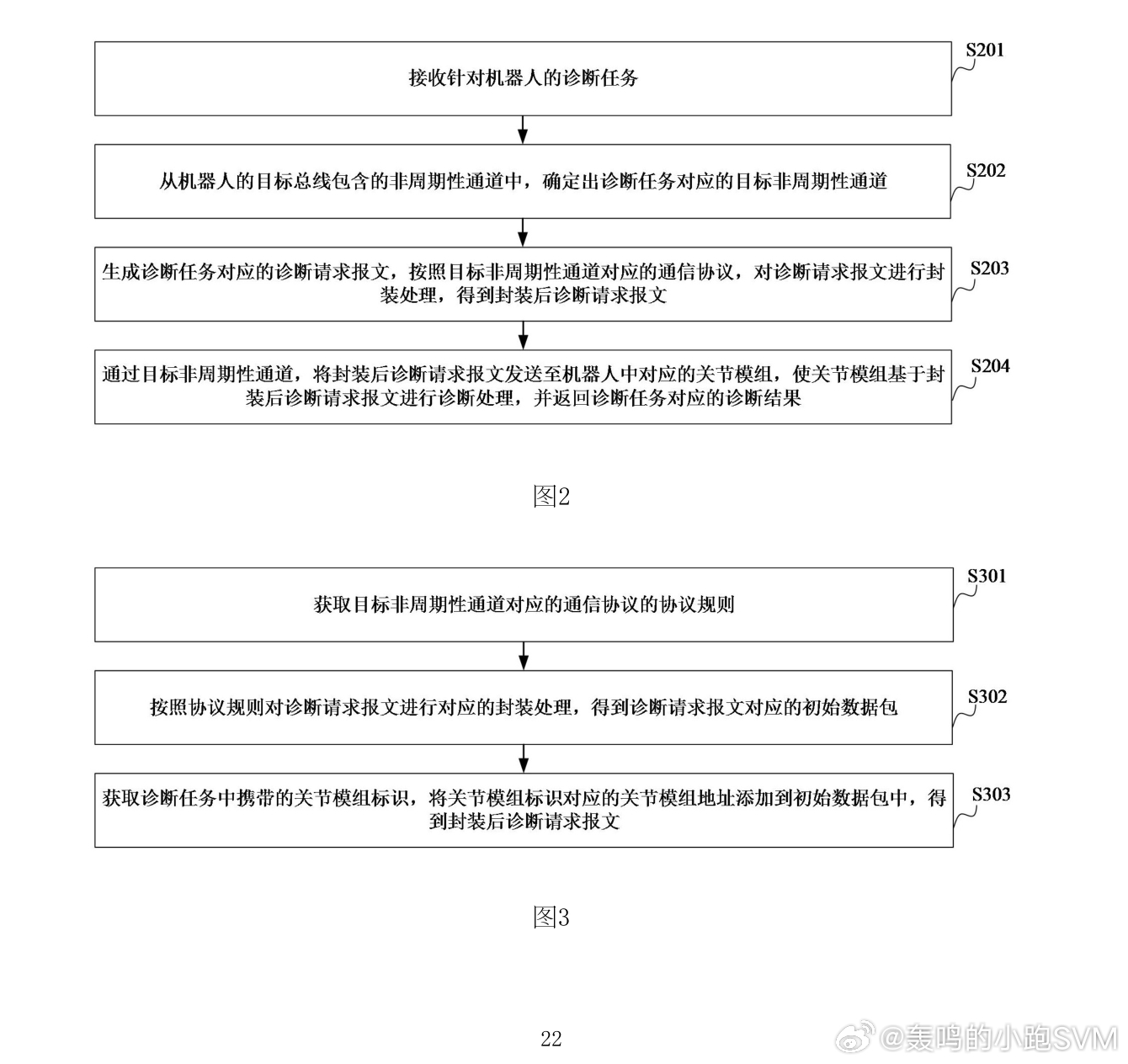 Photo: 轰鸣的小跑SVM on Weibo — original post
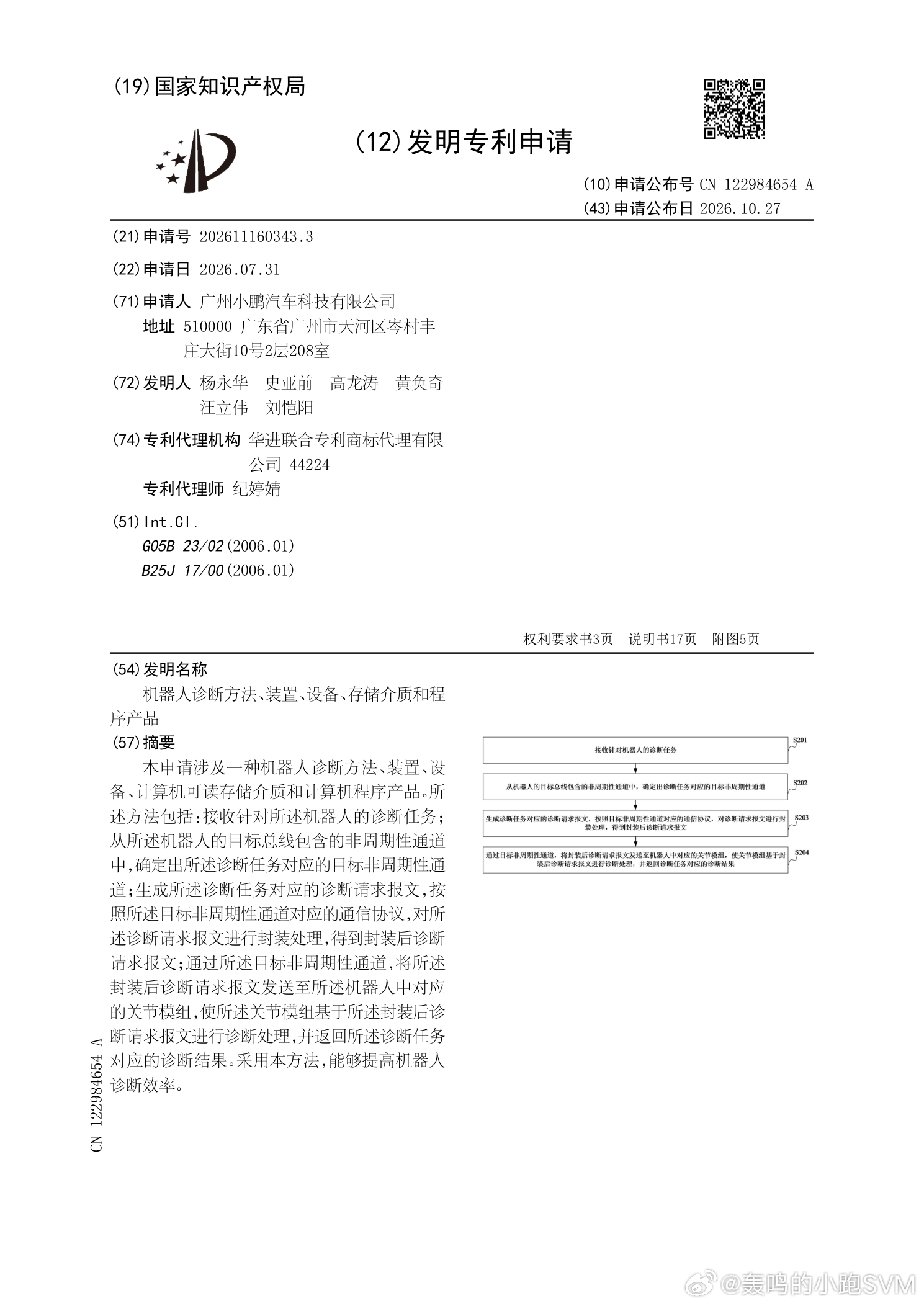 Photo: 轰鸣的小跑SVM on Weibo — original post
Enjoyed this? Get the next one direct.
New articles, or a daily / weekly digest — delivered to your inbox.