China Signals Push for Automaker Mergers to End Homogeneous Competition
At an MIIT press conference on China's intelligent connected NEV industry, the NDRC's Shao Ji said the state will support mergers and restructuring among large automakers, and push back on homogeneous competition in product design and technology R&D.
The Chinese government has given one of its clearest recent signals that it wants the country's car industry to consolidate. At a Ministry of Industry and Information Technology (MIIT) press conference introducing the state of China's intelligent connected new energy vehicle industry, Shao Ji, deputy director of the Industrial Development Department at the National Development and Reform Commission (NDRC), set out the position:
"We will actively support large enterprise groups in carrying out reform, advance mergers and restructuring between enterprises in a market-based and law-based manner, and support leading enterprises in effectively integrating R&D, production and other resources — so as to avoid homogeneous competition in product design, technology R&D and other areas."
"We encourage enterprises of all types to dig deep into their own characteristics, cultivate their segments of different markets, and form a differentiated competitive landscape, continuously promoting the industry's shift from scale expansion toward quality-and-efficiency improvement."
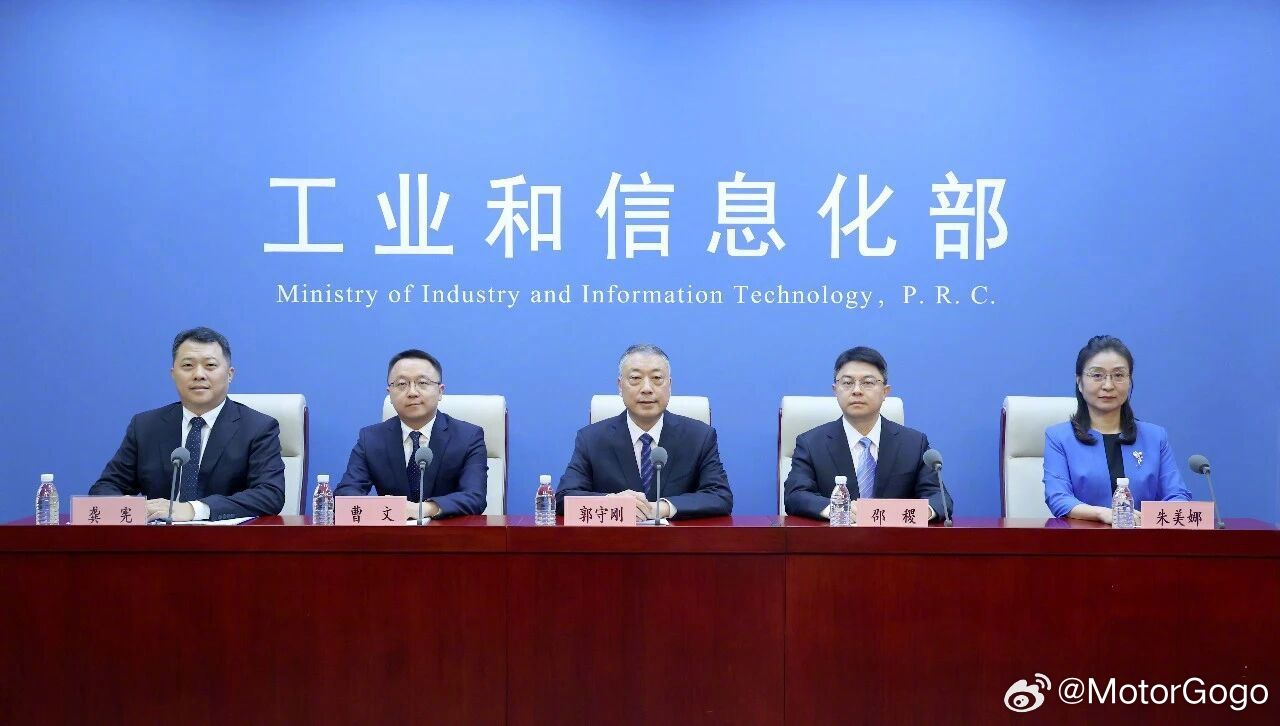
From "rush-built cars" to mergers
The post's own conclusion is that the signals have been accumulating: from the earlier debate over rush-built cars to today's talk of reform and mergers among large automakers.
That is a notable shift in emphasis. For the past few years the public conversation about China's EV industry was dominated by the opposite concern — too many brands, too fast, and models pushed to market before they were ready. The framing now coming from the state's economic planning apparatus is about what to do with that oversupply: recombine it rather than simply add to it.
What the language commits to
A few phrases are worth reading closely, because they set the boundaries of what is actually being proposed:
- "Support" large groups in carrying out reform — the state's role is framed as enabling, not directing.
- "Market-based and law-based manner" — the mechanism is explicitly not an administrative merger order.
- Integrating R&D and production resources — the stated target is duplicated capability, where several groups maintain parallel research and manufacturing organisations for the same class of product.
- Avoiding homogeneous competition — the diagnosis: brands converging on the same product designs and the same technology roadmaps, then competing mainly on price.
- Differentiated competition and segment focus — the preferred outcome, with each company cultivating its own strengths in particular market segments rather than everyone contesting the same ground.
- "Scale expansion to quality-and-efficiency improvement" — the industry-level goal the whole passage is attached to.
For a market that now carries a large number of competing NEV brands, the direction of travel is clear even though no individual company is named. Consolidation is being encouraged as policy, with the emphasis placed on R&D and production resources specifically — not on sales networks or branding.
The remarks are translated from the Chinese text as carried in the Weibo post, which reports the press conference and adds its own commentary (the "rush-built cars" framing is the post's language, not the officials'). Titles are as stated in the post; no specific companies were named in the quoted remarks.
Source: MotorGogo, Weibo — translated & adapted for XPENGTech.
Enjoyed this? Get the next one direct.
New articles, or a daily / weekly digest — delivered to your inbox.